
Cine-Kodak Special Camera

$250 - SOLD
Item #C14611
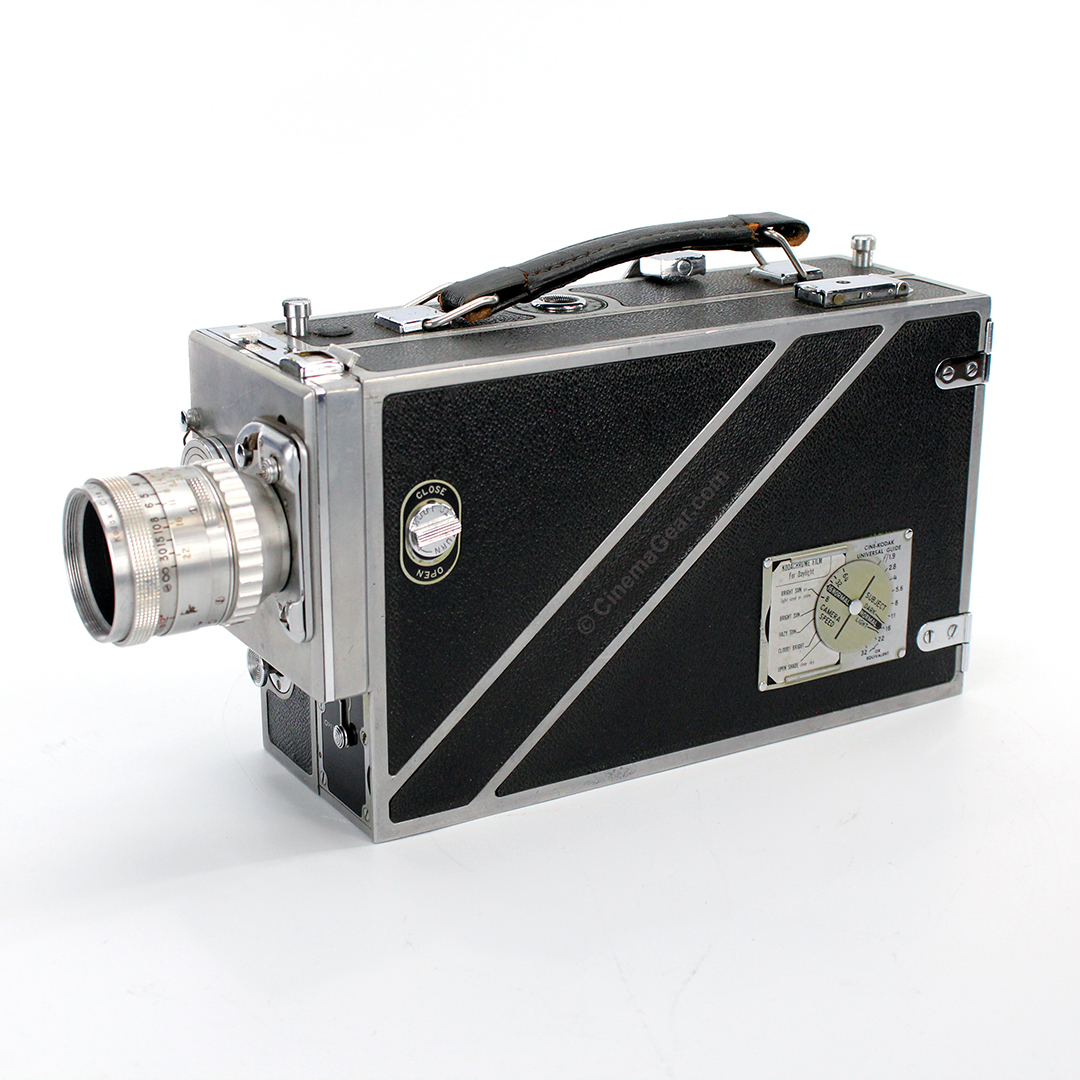
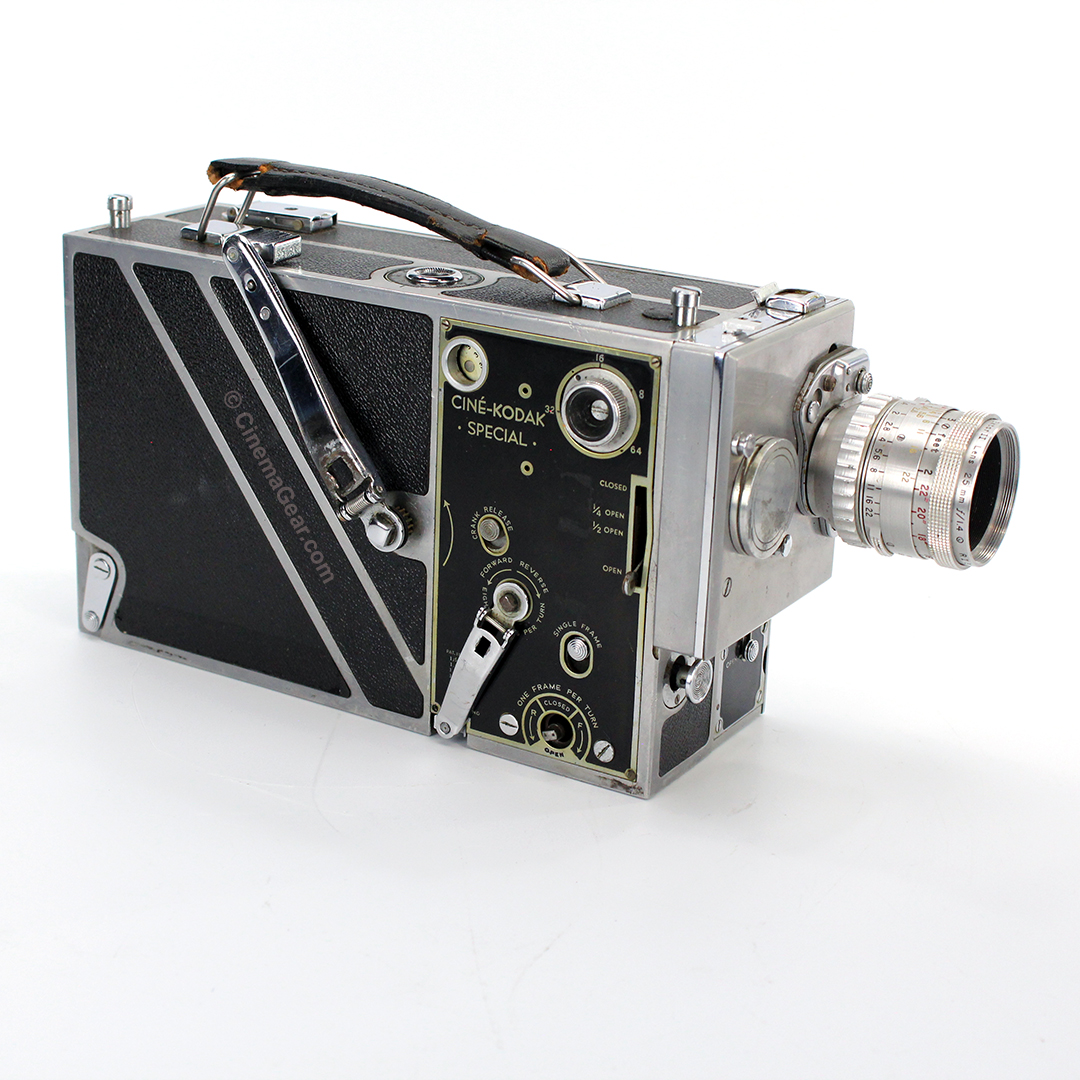
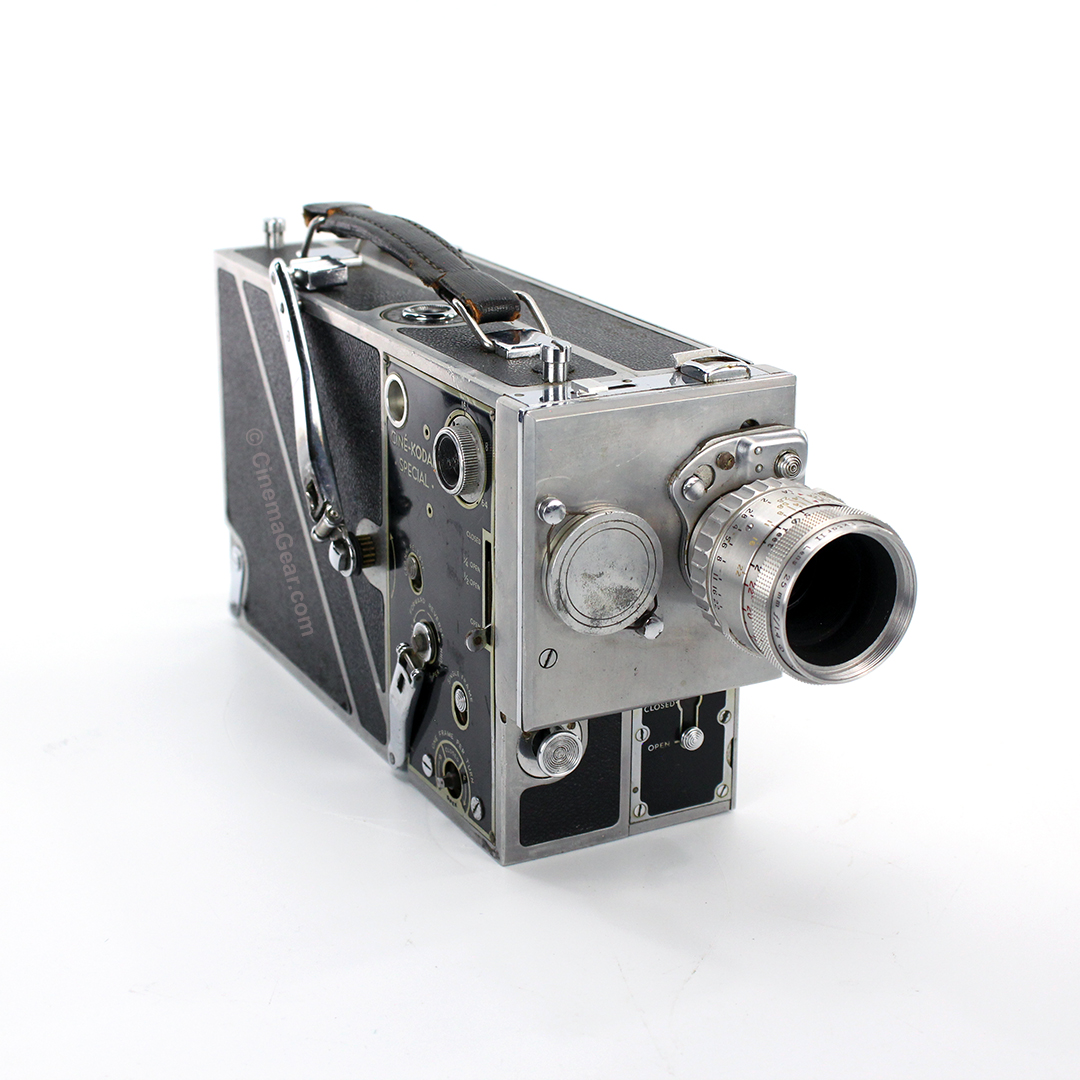
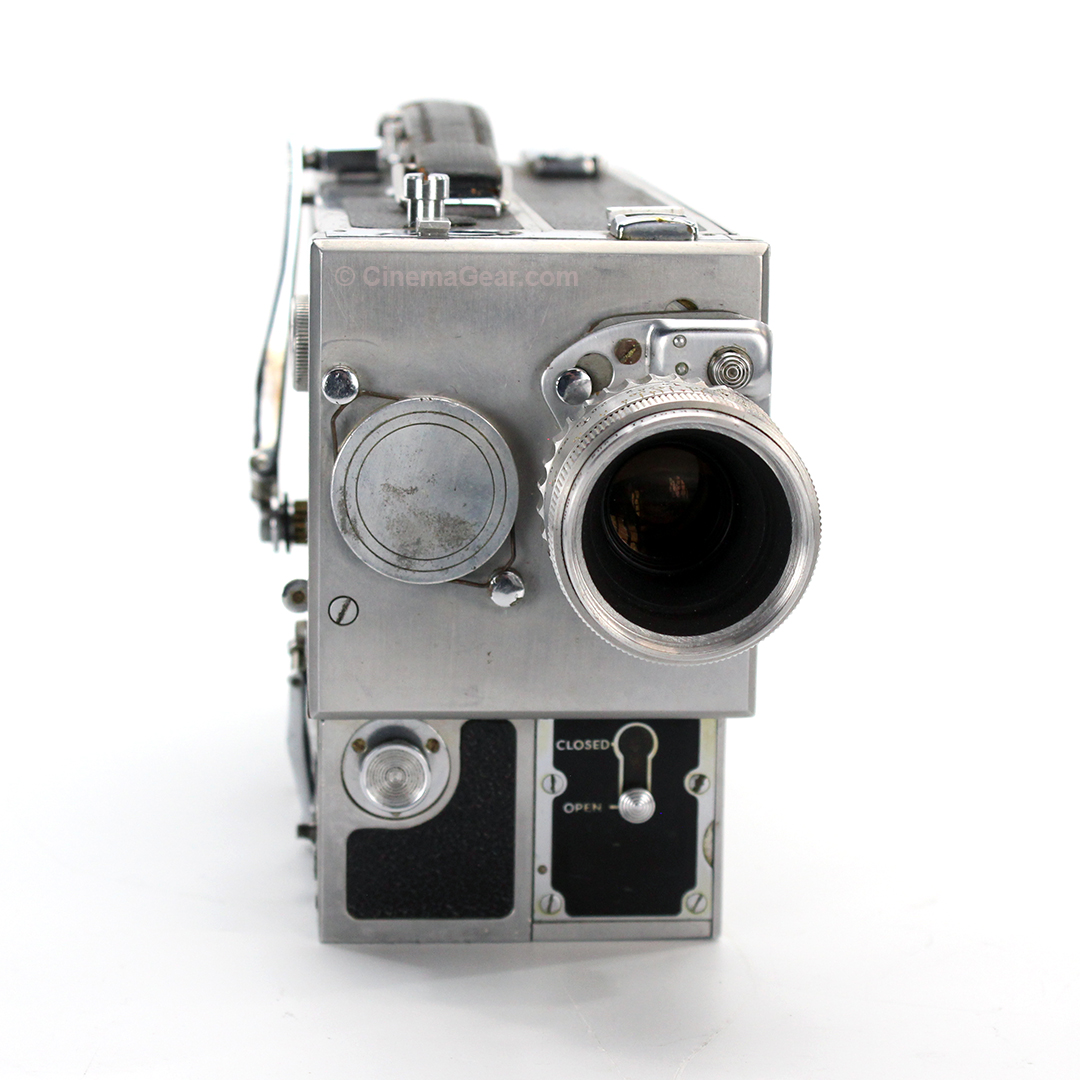
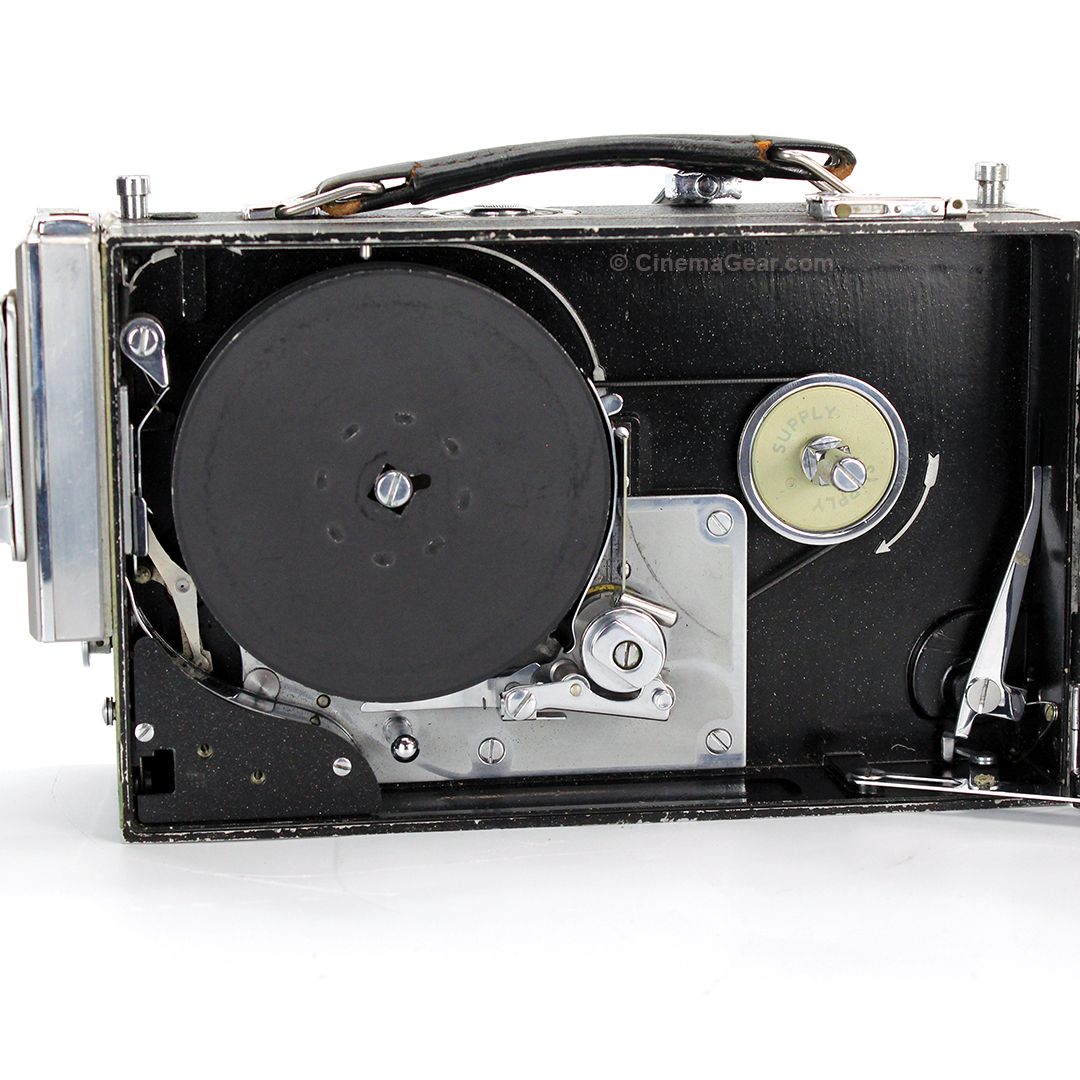
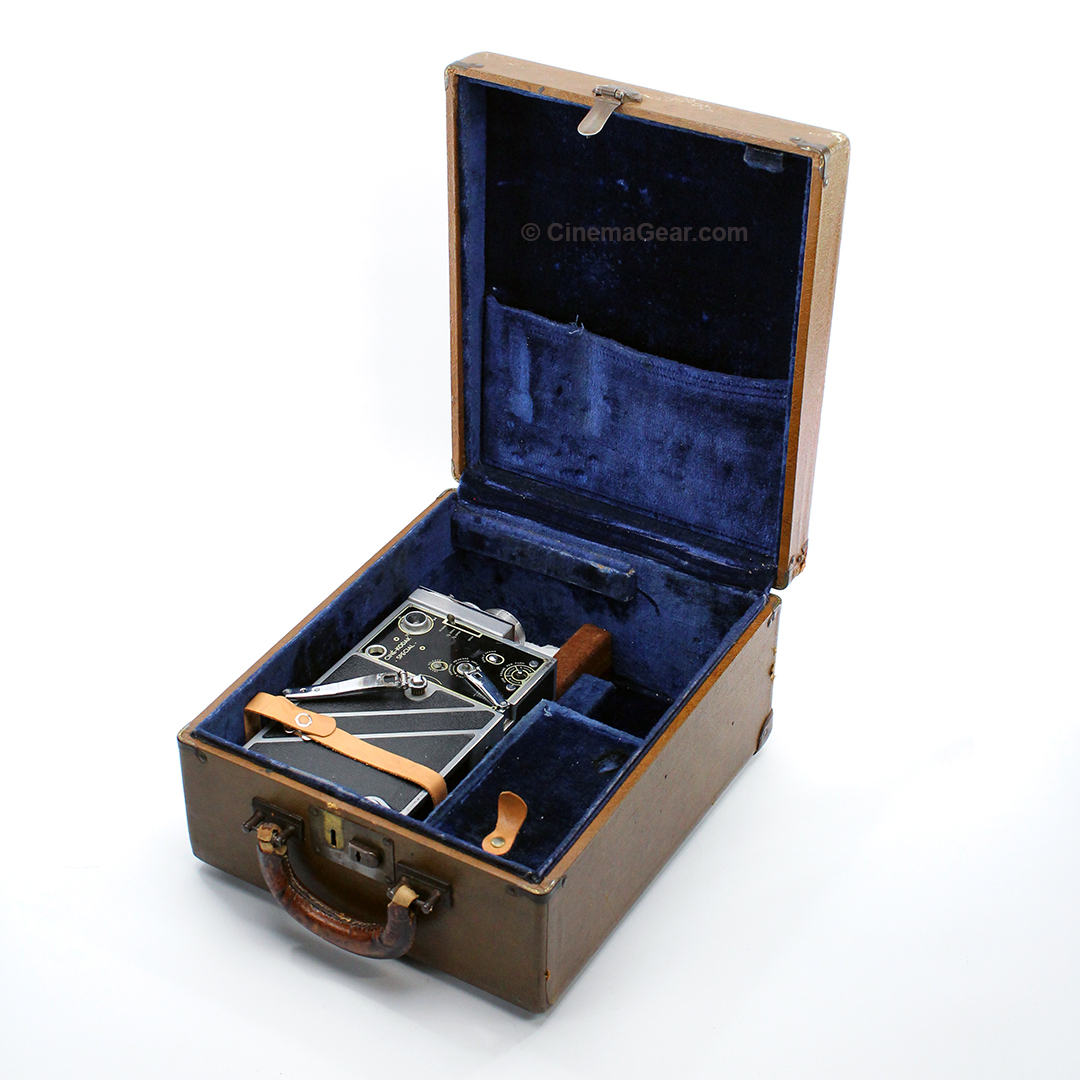
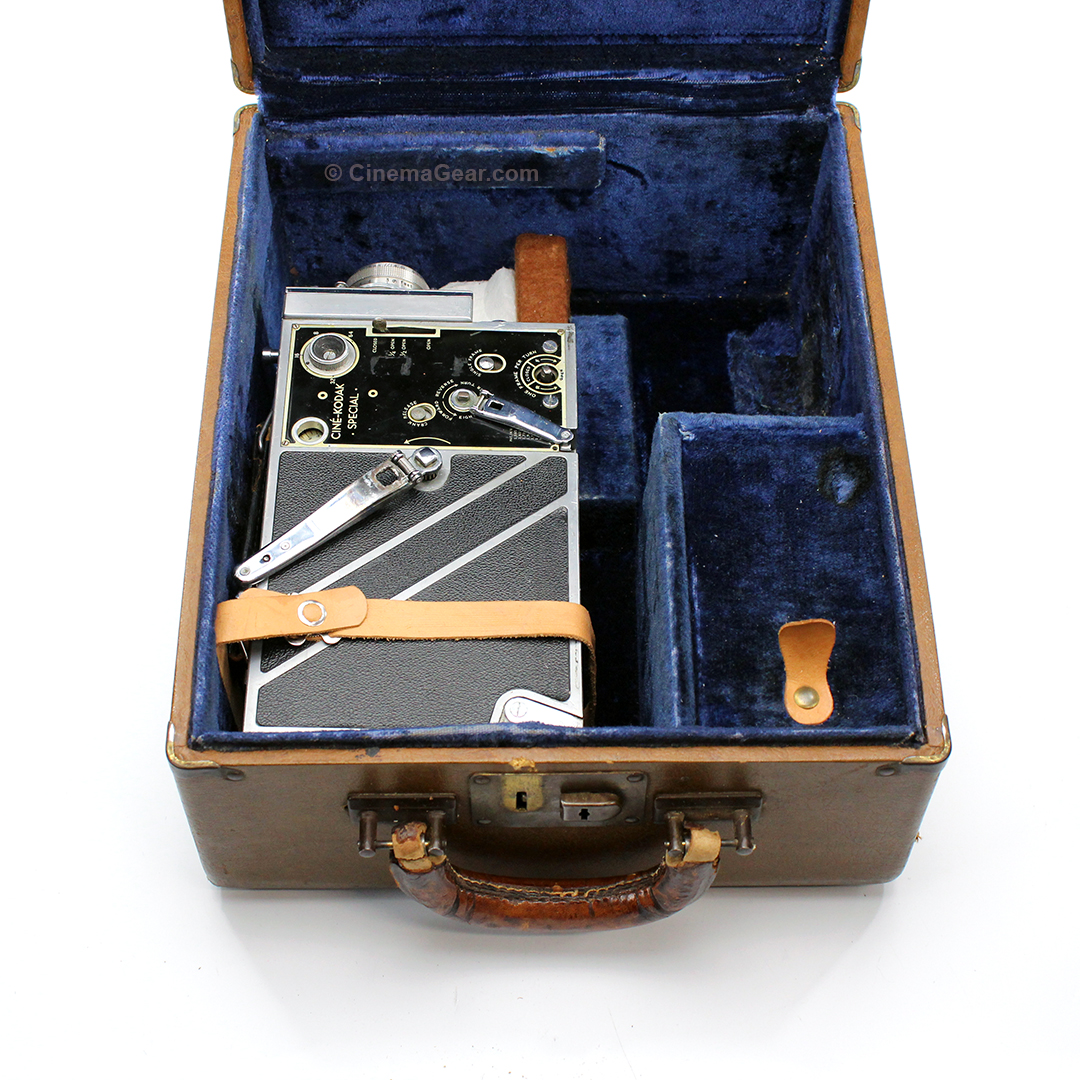
The Cine Kodak Special 16mm camera was introduced in 1933 to appeal to the expanding educational, industrial, commercial, scientific, and amateur markets. The unique features of this camera, including its interchangeable magazines, two lens turret, through the lens focusing, variable speed, variable shutter, single frame and continuous shooting modes, and long run time, made it ideal for the amateur and professional movie maker alike. This particular example comes with a Kodak Cine Ektar II 25mm f1.4 lens and a fitted case. The camera has been cleaned, lubricated, and run with film. It is sold as is. Comes with a copy of an original user’s guide for the Cine Kodak Special.
Photo Gallery:
A Brief History of Kodak
George Eastman, founder of the Eastman Kodak Company, was born in Waterville, NY in 1854. At the age of 24, Eastman became interested in photography and the current trend among British photographers of making their own gelatin emulsions. He spent three years experimenting with and perfecting his own gelatin formulas and making dry plates. By 1880, Eastman had patented a machine for mass-producing his gelatin dry plates, which he also began to sell. The success of these dry plates attracted the attention of businessman Harry A. Strong. With the addition of Strong’s financial investment, the two men formed a new company, the Eastman Dry Plate Company, in January 1881. This development allowed Eastman to resign from the bank job he had held since 1874 and focus solely on his new photography business. Eastman continued his work in making photography more portable and convenient for the photographer. To that end, he began experimenting with coating paper with photographic emulsion. In 1883, Eastman introduced roll film using paper as the backing. He continued to adapt and improve his creation, moving away from the paper backing which caused grain to appear in the resulting photos. This led to his revolutionary development of transparent roll film and paved his way to success in the photography business.
In 1884, Eastman, Strong, and about a dozen shareholders formed the Eastman Dry Plate and Film Company to market Eastman’s creation. The Kodak name was trademarked in 1888, and the Eastman Kodak name was adopted in 1892 and incorporated in New York. The first Kodak still camera was released in 1888, and came preloaded with enough film for 100 exposures. The camera sold for $25, and was designed to be returned to Kodak where the film would be developed and prints made. Then the camera was reloaded with film and everything was returned to the customer, all for $10. Camera and film developing costs went down relatively quickly, and by 1900, when the Kodak Brownie was introduced, the camera cost only $1, and $0.15 for a roll of film.
Kodak began marketing specially coated film for motion picture use in 1896. This early film fueled the burgeoning American motion picture industy. Later, in 1923, they introduced 16mm reversal (safety) film on a cellulose acetate base. This development allowed the amateur filmmaking market to flourish and eliminated the dangerous fire risk associated with nitrate film. To go along with their new 16mm safety film, Kodak also launched their first amateur motion picture camera, the Cine-Kodak Model A. The Model A was operated by hand crank and was originally sold as a complete shooting package with a tripod, a splicer, a projector, and a screen. Kodak has been recognized with 9 Academy Awards over the decades for its scientific and technical achievements.
Sources:
- "Milestones," Kodak Company, updated 2021, View source.
- "History," Kodak Company, updated 2021, View source.
- Douglas A. Kerr, "The film cameras that made 'home movies' possible," (December 31, 2017), View source.