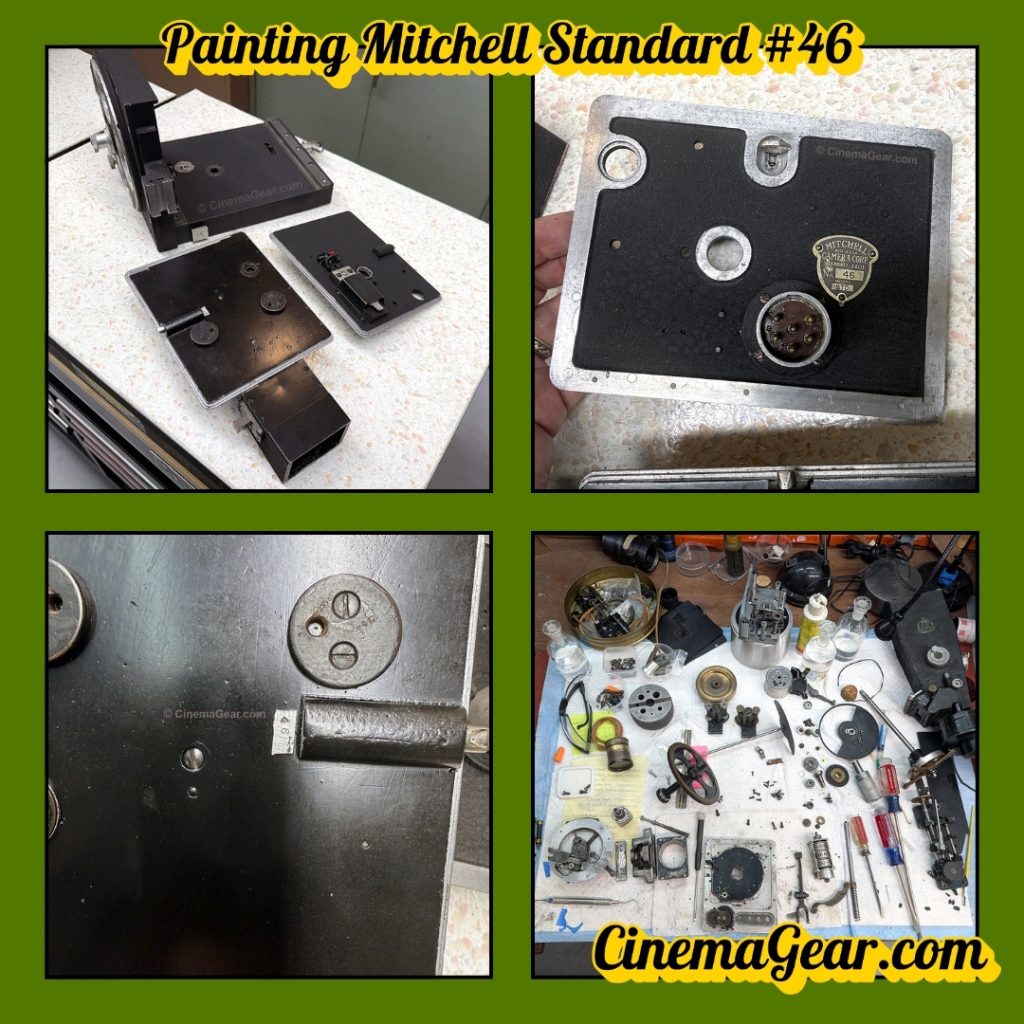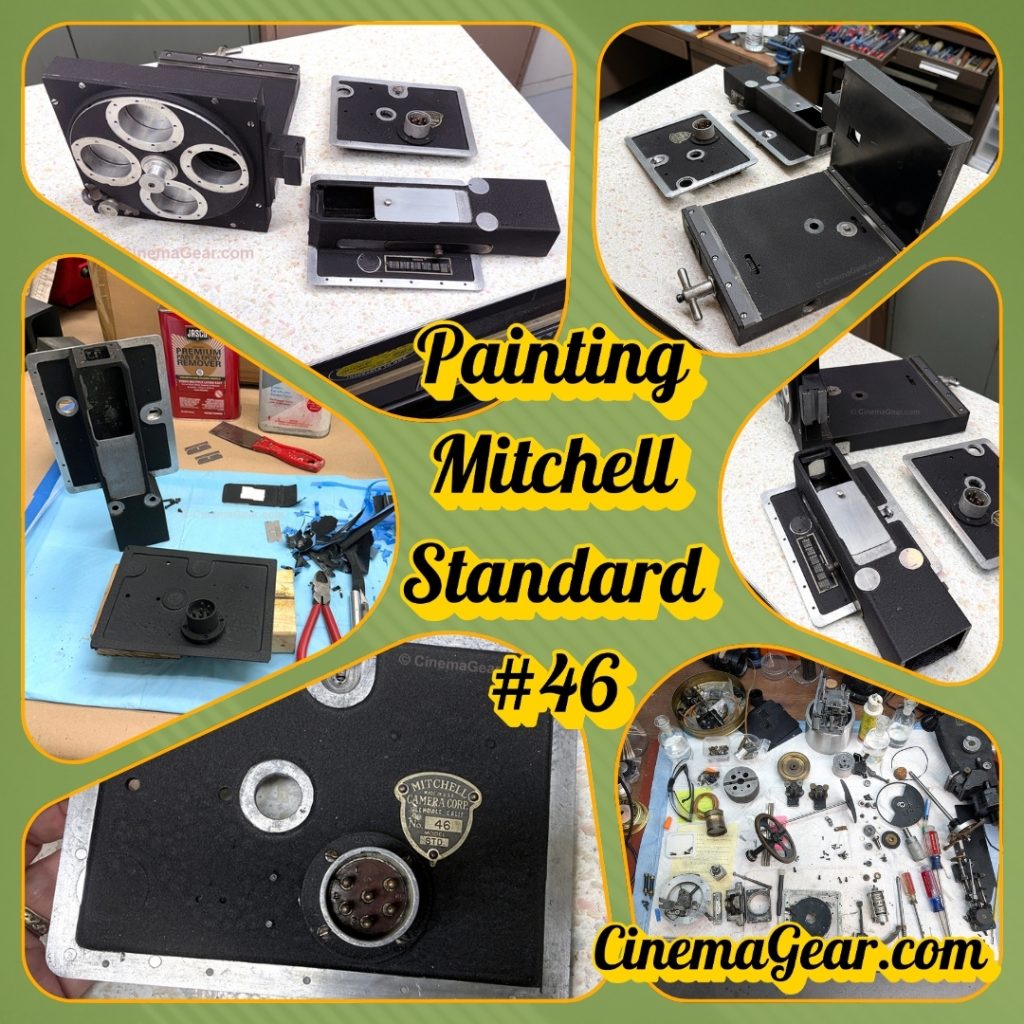
Work continues this week with the slow and tedious process of stripping, patching, sanding, cleaning, and masking Mitchell Standard #46 as I get the rest of the pieces ready for paint. Over its 100+ years of life, Mitchell 46 has been altered, modified, and abused by its many users, leaving it with a variety of holes, skive marks, broken off pieces, and other cosmetic and functional aberrations that needed repair. Thus preparing the camera for paint involved dealing with a lot of different materials, all requiring different levels of care. Another aspect of this process I don’t often mention is that the various chemical stripping agents can leave a chemical residue that will interfere with the paint curing properly and sticking to the surface permanently. To combat this, my process involves using the stripper, removing all of the old paint, sanding all surfaces, washing all surfaces with warm water and dish washing detergent, making sure all surfaces are completely dry, and then wiping all the surfaces down with acetone, before finally masking and getting ready to paint.
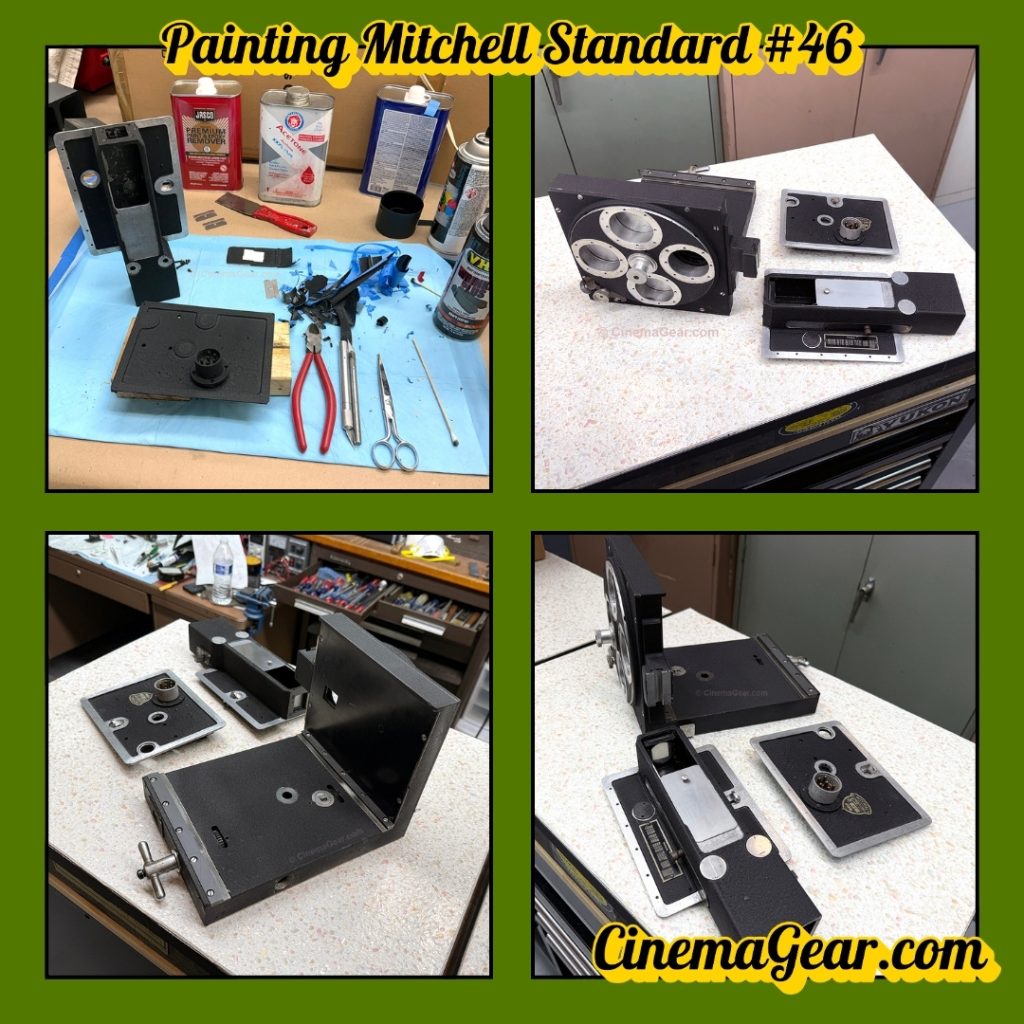
I managed all of these nitpicky steps on the L-base, the main camera door, and the motor door this week. As you can see in the pictures, the outside surfaces are painted in wrinkle black and the inside surfaces are painted smooth flat black. Traditionally, the inside of the camera was painted flat black to avoid any unwanted fogging of the film by light reflected inside the camera box. The wrinkle paint, aside from looking fancy, was able to disguise many flaws in the casting, which saved on machine time. I chose to begin with the L-base and the doors because they involve the least amount of dismantling before they can be painted. This clears space on my workbench to prepare the main camera body, which must be completely disassembled into its many, many, many little parts before the camera casting can be stripped and painted. The process continues next week.